


upcoming
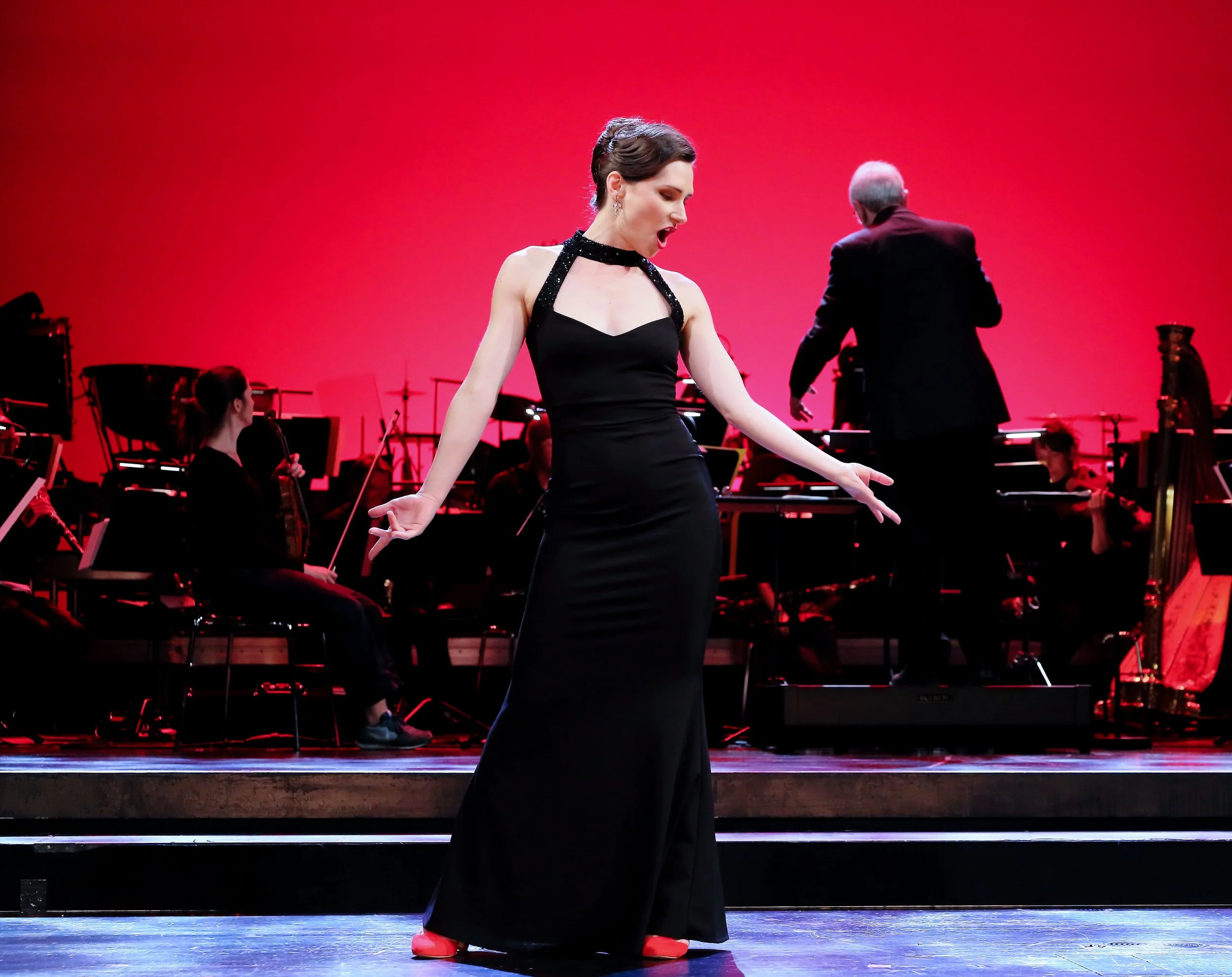
GIUDITTA - PREMIERE
“Your heart burns on my lips”
An unclassifiable, lyrical and sensual operetta
In 1934, Franz Lehár, composer of The Merry Widow, was at the height of his fame. The premiere of Giuditta at the Vienna State Opera was broadcast live on over a hundred radio stations around the world… On the eve of World War II, Europe gave a triumphant reception to this joyfully apocalyptic music, a “musical comedy” with a libretto by Paul Knepler and Fritz Löhner-Beda.
A singer and dancer at the Alcazar cabaret, this beautiful and mysterious heroine is the Marlene Dietrich of opera – as seen in the movies Morocco and The Blue Angel. With Giuditta – the swan song of the composer and indeed of an entire era – Viennese operetta draws closer to opera, and Lehár to Puccini. Giuditta resembles Tosca in the depth of her passion, or Carmen in her demand for freedom. The South of France, a cruise ship voyage, Morocco: the various settings of the action enable Lehár to give free rein to the many charms of his art, ranging from Viennese waltzes to light, appealing melodies, lush orchestration tinged with exoticism, along with the sensual lyricism of the grand arias. A world away from boring clichés and brimming with contrasts, the music and story culminate in a surprising bittersweet ending.
Pierre-André Weitz’s flamboyant and inventive staging will transport us to the realm of 1930s circus and cabaret. A connoisseur of this repertoire, Viennese conductor Thomas Rösner will be making his debut at the Opéra de Lausanne, conducting the Sinfonietta de Lausanne in the French version of this spellbinding rarity.
Premiere on January 20, 1934, at the Vienna State Opera in Vienna
© KARCZAG EDITIONS
Conductor
Thomas Rösner
Director, Set Design, Costumes
Pierre-André Weitz
Lighting
Bertrand Killy
Choregraphy & Director's Assistant
Ivo Bauchiero
Giuditta
Camille Schnoor
Anita
Sandrine Buendia
Octavio
Julien Henric
Manuel, Lord Barrymore, Son Altesse
Nicolas Rivenq
Séraphin
Jean Miannay
Marcelin, l'Attaché, Ibrahim, un Chanteur de rue
Christophe Gay
Jean Cévenol
Jacques Verzier
L'Hôtelier, le Maître d'hôtel
Rodolphe Briand
Le Garçon de restaurant, un Chanteur de rue, un Sous-officier, un Pêcheur
Pierre Lebon
Sinfonietta de Lausanne
Opéra de Lausanne Choir
Choir Conductor Anass Ismat
GIUDITTA
“Your heart burns on my lips”
An unclassifiable, lyrical and sensual operetta
In 1934, Franz Lehár, composer of The Merry Widow, was at the height of his fame. The premiere of Giuditta at the Vienna State Opera was broadcast live on over a hundred radio stations around the world… On the eve of World War II, Europe gave a triumphant reception to this joyfully apocalyptic music, a “musical comedy” with a libretto by Paul Knepler and Fritz Löhner-Beda.
A singer and dancer at the Alcazar cabaret, this beautiful and mysterious heroine is the Marlene Dietrich of opera – as seen in the movies Morocco and The Blue Angel. With Giuditta – the swan song of the composer and indeed of an entire era – Viennese operetta draws closer to opera, and Lehár to Puccini. Giuditta resembles Tosca in the depth of her passion, or Carmen in her demand for freedom. The South of France, a cruise ship voyage, Morocco: the various settings of the action enable Lehár to give free rein to the many charms of his art, ranging from Viennese waltzes to light, appealing melodies, lush orchestration tinged with exoticism, along with the sensual lyricism of the grand arias. A world away from boring clichés and brimming with contrasts, the music and story culminate in a surprising bittersweet ending.
Pierre-André Weitz’s flamboyant and inventive staging will transport us to the realm of 1930s circus and cabaret. A connoisseur of this repertoire, Viennese conductor Thomas Rösner will be making his debut at the Opéra de Lausanne, conducting the Sinfonietta de Lausanne in the French version of this spellbinding rarity.
Premiere on January 20, 1934, at the Vienna State Opera in Vienna
© KARCZAG EDITIONS
Conductor
Thomas Rösner
Director, Set Design, Costumes
Pierre-André Weitz
Lighting
Bertrand Killy
Choregraphy & Director's Assistant
Ivo Bauchiero
Giuditta
Camille Schnoor
Anita
Sandrine Buendia
Octavio
Julien Henric
Manuel, Lord Barrymore, Son Altesse
Nicolas Rivenq
Séraphin
Jean Miannay
Marcelin, l'Attaché, Ibrahim, un Chanteur de rue
Christophe Gay
Jean Cévenol
Jacques Verzier
L'Hôtelier, le Maître d'hôtel
Rodolphe Briand
Le Garçon de restaurant, un Chanteur de rue, un Sous-officier, un Pêcheur
Pierre Lebon
Sinfonietta de Lausanne
Opéra de Lausanne Choir
Choir Conductor Anass Ismat
GIUDITTA
“Your heart burns on my lips”
An unclassifiable, lyrical and sensual operetta
In 1934, Franz Lehár, composer of The Merry Widow, was at the height of his fame. The premiere of Giuditta at the Vienna State Opera was broadcast live on over a hundred radio stations around the world… On the eve of World War II, Europe gave a triumphant reception to this joyfully apocalyptic music, a “musical comedy” with a libretto by Paul Knepler and Fritz Löhner-Beda.
A singer and dancer at the Alcazar cabaret, this beautiful and mysterious heroine is the Marlene Dietrich of opera – as seen in the movies Morocco and The Blue Angel. With Giuditta – the swan song of the composer and indeed of an entire era – Viennese operetta draws closer to opera, and Lehár to Puccini. Giuditta resembles Tosca in the depth of her passion, or Carmen in her demand for freedom. The South of France, a cruise ship voyage, Morocco: the various settings of the action enable Lehár to give free rein to the many charms of his art, ranging from Viennese waltzes to light, appealing melodies, lush orchestration tinged with exoticism, along with the sensual lyricism of the grand arias. A world away from boring clichés and brimming with contrasts, the music and story culminate in a surprising bittersweet ending.
Pierre-André Weitz’s flamboyant and inventive staging will transport us to the realm of 1930s circus and cabaret. A connoisseur of this repertoire, Viennese conductor Thomas Rösner will be making his debut at the Opéra de Lausanne, conducting the Sinfonietta de Lausanne in the French version of this spellbinding rarity.
Premiere on January 20, 1934, at the Vienna State Opera in Vienna
© KARCZAG EDITIONS
Conductor
Thomas Rösner
Director, Set Design, Costumes
Pierre-André Weitz
Lighting
Bertrand Killy
Choregraphy & Director's Assistant
Ivo Bauchiero
Giuditta
Camille Schnoor
Anita
Sandrine Buendia
Octavio
Julien Henric
Manuel, Lord Barrymore, Son Altesse
Nicolas Rivenq
Séraphin
Jean Miannay
Marcelin, l'Attaché, Ibrahim, un Chanteur de rue
Christophe Gay
Jean Cévenol
Jacques Verzier
L'Hôtelier, le Maître d'hôtel
Rodolphe Briand
Le Garçon de restaurant, un Chanteur de rue, un Sous-officier, un Pêcheur
Pierre Lebon
Sinfonietta de Lausanne
Opéra de Lausanne Choir
Choir Conductor Anass Ismat
GIUDITTA
“Your heart burns on my lips”
An unclassifiable, lyrical and sensual operetta
In 1934, Franz Lehár, composer of The Merry Widow, was at the height of his fame. The premiere of Giuditta at the Vienna State Opera was broadcast live on over a hundred radio stations around the world… On the eve of World War II, Europe gave a triumphant reception to this joyfully apocalyptic music, a “musical comedy” with a libretto by Paul Knepler and Fritz Löhner-Beda.
A singer and dancer at the Alcazar cabaret, this beautiful and mysterious heroine is the Marlene Dietrich of opera – as seen in the movies Morocco and The Blue Angel. With Giuditta – the swan song of the composer and indeed of an entire era – Viennese operetta draws closer to opera, and Lehár to Puccini. Giuditta resembles Tosca in the depth of her passion, or Carmen in her demand for freedom. The South of France, a cruise ship voyage, Morocco: the various settings of the action enable Lehár to give free rein to the many charms of his art, ranging from Viennese waltzes to light, appealing melodies, lush orchestration tinged with exoticism, along with the sensual lyricism of the grand arias. A world away from boring clichés and brimming with contrasts, the music and story culminate in a surprising bittersweet ending.
Pierre-André Weitz’s flamboyant and inventive staging will transport us to the realm of 1930s circus and cabaret. A connoisseur of this repertoire, Viennese conductor Thomas Rösner will be making his debut at the Opéra de Lausanne, conducting the Sinfonietta de Lausanne in the French version of this spellbinding rarity.
Premiere on January 20, 1934, at the Vienna State Opera in Vienna
© KARCZAG EDITIONS
Conductor
Thomas Rösner
Director, Set Design, Costumes
Pierre-André Weitz
Lighting
Bertrand Killy
Choregraphy & Director's Assistant
Ivo Bauchiero
Giuditta
Camille Schnoor
Anita
Sandrine Buendia
Octavio
Julien Henric
Manuel, Lord Barrymore, Son Altesse
Nicolas Rivenq
Séraphin
Jean Miannay
Marcelin, l'Attaché, Ibrahim, un Chanteur de rue
Christophe Gay
Jean Cévenol
Jacques Verzier
L'Hôtelier, le Maître d'hôtel
Rodolphe Briand
Le Garçon de restaurant, un Chanteur de rue, un Sous-officier, un Pêcheur
Pierre Lebon
Sinfonietta de Lausanne
Opéra de Lausanne Choir
Choir Conductor Anass Ismat
GIUDITTA
“Your heart burns on my lips”
An unclassifiable, lyrical and sensual operetta
In 1934, Franz Lehár, composer of The Merry Widow, was at the height of his fame. The premiere of Giuditta at the Vienna State Opera was broadcast live on over a hundred radio stations around the world… On the eve of World War II, Europe gave a triumphant reception to this joyfully apocalyptic music, a “musical comedy” with a libretto by Paul Knepler and Fritz Löhner-Beda.
A singer and dancer at the Alcazar cabaret, this beautiful and mysterious heroine is the Marlene Dietrich of opera – as seen in the movies Morocco and The Blue Angel. With Giuditta – the swan song of the composer and indeed of an entire era – Viennese operetta draws closer to opera, and Lehár to Puccini. Giuditta resembles Tosca in the depth of her passion, or Carmen in her demand for freedom. The South of France, a cruise ship voyage, Morocco: the various settings of the action enable Lehár to give free rein to the many charms of his art, ranging from Viennese waltzes to light, appealing melodies, lush orchestration tinged with exoticism, along with the sensual lyricism of the grand arias. A world away from boring clichés and brimming with contrasts, the music and story culminate in a surprising bittersweet ending.
Pierre-André Weitz’s flamboyant and inventive staging will transport us to the realm of 1930s circus and cabaret. A connoisseur of this repertoire, Viennese conductor Thomas Rösner will be making his debut at the Opéra de Lausanne, conducting the Sinfonietta de Lausanne in the French version of this spellbinding rarity.
Premiere on January 20, 1934, at the Vienna State Opera in Vienna
© KARCZAG EDITIONS
Conductor
Thomas Rösner
Director, Set Design, Costumes
Pierre-André Weitz
Lighting
Bertrand Killy
Choregraphy & Director's Assistant
Ivo Bauchiero
Giuditta
Camille Schnoor
Anita
Sandrine Buendia
Octavio
Julien Henric
Manuel, Lord Barrymore, Son Altesse
Nicolas Rivenq
Séraphin
Jean Miannay
Marcelin, l'Attaché, Ibrahim, un Chanteur de rue
Christophe Gay
Jean Cévenol
Jacques Verzier
L'Hôtelier, le Maître d'hôtel
Rodolphe Briand
Le Garçon de restaurant, un Chanteur de rue, un Sous-officier, un Pêcheur
Pierre Lebon
Sinfonietta de Lausanne
Opéra de Lausanne Choir
Choir Conductor Anass Ismat
WAGNER, MAHLER
Presentation
Ce concert est présenté dans le cadre du Congrès international Richard Wagner 2027 qui se déroulera à Nice. Ce congrès s’inscrit dans la tradition des grands rassemblements organisés par l’Association internationale des cercles Richard Wagner, qui fédère des cercles présents dans le monde entier. Cette organisation a pour vocation de promouvoir l’œuvre de Richard Wagner, d’en approfondir la compréhension, de soutenir les jeunes talents artistiques, ainsi que le Festival de Bayreuth, tout en favorisant les échanges internationaux.
Chaque année, ce congrès réunit des passionnés venus de nombreux pays autour d’un programme riche mêlant opéra, musicologie et rencontres culturelles.
Gustav Mahler Lieder eines fahrenden Gesellen (orchestration Schönberg)
Richard Wagner Siegfried Idyll
Richard Wagner Wesendonck-Lieder (orchestration Maestri)
Soprano Camille Schnoor
Direction musicale Marko Letonja
Orchestre Philharmonique de Nice
MANON LESCAUT - PREMIERE
Presentation
Synopsis
Jeune femme promise au couvent mais éprise de liberté et de plaisirs, Manon s’enfuit avec le chevalier Des Grieux, dont elle partage la passion ardente. Mais son attrait pour le luxe et la vie mondaine va rapidement compliquer cette relation pourtant sincère. De Paris à la Louisiane, c’est tout le parcours déchirant de ces deux cœurs qui se joue devant nous, jusqu’à l’ultime face-à-face avec la mort.
À propos du spectacle
Pour rendre justice à ce drame incandescent – et premier chef-d’œuvre absolu de Puccini –, c’est une pléiade de solistes prestigieux que nous avons réunis : Ivan Magrì, Dalibor Jenis et, dans le rôle-titre, la soprano niçoise Camille Schnoor, placés sous la direction vibrante d’Ariane Matiakh. Confiée à Oliver Mears, directeur du Royal Opera House de Londres, cette nouvelle production interrogera les méandres du désir de notre monde moderne et les rapports homme-femme.
Distribution
Nouvelle production
Coproduction Opéra Nice Côte d’Azur, Royal Opera House Londres, Covent Garden Théâtre des Champs-Élysées
Drame lyrique en quatre actes de Giacomo Puccini, sur un livret de Luigi Illica, Giuseppe Giacosa et Marco Praga
Création le 1er février 1893 à Turin
Direction musicale Ariane Matiakh
Mise en scène Oliver Mears
Décors & Costumes Annemarie Woods
Co-scénographe Ricardo Pardo
Lumières Fabiana Piccioli
Chorégraphie Sarah Fahie
Manon Lescaut Camille Schnoor
Des Grieux Ivan Magrì
Lescaut Dalibor Jenis
Geronte de Ravoir Nika Guliashvili
Edmond | le maître de ballet | un allumeur de réverbère Matteo Mezzaro
Orchestre Philharmonique de Nice
Chœur de l’Opéra de Nice
MANON LESCAUT
Presentation
Synopsis
Jeune femme promise au couvent mais éprise de liberté et de plaisirs, Manon s’enfuit avec le chevalier Des Grieux, dont elle partage la passion ardente. Mais son attrait pour le luxe et la vie mondaine va rapidement compliquer cette relation pourtant sincère. De Paris à la Louisiane, c’est tout le parcours déchirant de ces deux cœurs qui se joue devant nous, jusqu’à l’ultime face-à-face avec la mort.
À propos du spectacle
Pour rendre justice à ce drame incandescent – et premier chef-d’œuvre absolu de Puccini –, c’est une pléiade de solistes prestigieux que nous avons réunis : Ivan Magrì, Dalibor Jenis et, dans le rôle-titre, la soprano niçoise Camille Schnoor, placés sous la direction vibrante d’Ariane Matiakh. Confiée à Oliver Mears, directeur du Royal Opera House de Londres, cette nouvelle production interrogera les méandres du désir de notre monde moderne et les rapports homme-femme.
Distribution
Nouvelle production
Coproduction Opéra Nice Côte d’Azur, Royal Opera House Londres, Covent Garden Théâtre des Champs-Élysées
Drame lyrique en quatre actes de Giacomo Puccini, sur un livret de Luigi Illica, Giuseppe Giacosa et Marco Praga
Création le 1er février 1893 à Turin
Direction musicale Ariane Matiakh
Mise en scène Oliver Mears
Décors & Costumes Annemarie Woods
Co-scénographe Ricardo Pardo
Lumières Fabiana Piccioli
Chorégraphie Sarah Fahie
Manon Lescaut Camille Schnoor
Des Grieux Ivan Magrì
Lescaut Dalibor Jenis
Geronte de Ravoir Nika Guliashvili
Edmond | le maître de ballet | un allumeur de réverbère Matteo Mezzaro
Orchestre Philharmonique de Nice
Chœur de l’Opéra de Nice
MANON LESCAUT
Presentation
Synopsis
Jeune femme promise au couvent mais éprise de liberté et de plaisirs, Manon s’enfuit avec le chevalier Des Grieux, dont elle partage la passion ardente. Mais son attrait pour le luxe et la vie mondaine va rapidement compliquer cette relation pourtant sincère. De Paris à la Louisiane, c’est tout le parcours déchirant de ces deux cœurs qui se joue devant nous, jusqu’à l’ultime face-à-face avec la mort.
À propos du spectacle
Pour rendre justice à ce drame incandescent – et premier chef-d’œuvre absolu de Puccini –, c’est une pléiade de solistes prestigieux que nous avons réunis : Ivan Magrì, Dalibor Jenis et, dans le rôle-titre, la soprano niçoise Camille Schnoor, placés sous la direction vibrante d’Ariane Matiakh. Confiée à Oliver Mears, directeur du Royal Opera House de Londres, cette nouvelle production interrogera les méandres du désir de notre monde moderne et les rapports homme-femme.
Distribution
Nouvelle production
Coproduction Opéra Nice Côte d’Azur, Royal Opera House Londres, Covent Garden Théâtre des Champs-Élysées
Drame lyrique en quatre actes de Giacomo Puccini, sur un livret de Luigi Illica, Giuseppe Giacosa et Marco Praga
Création le 1er février 1893 à Turin
Direction musicale Ariane Matiakh
Mise en scène Oliver Mears
Décors & Costumes Annemarie Woods
Co-scénographe Ricardo Pardo
Lumières Fabiana Piccioli
Chorégraphie Sarah Fahie
Manon Lescaut Camille Schnoor
Des Grieux Ivan Magrì
Lescaut Dalibor Jenis
Geronte de Ravoir Nika Guliashvili
Edmond | le maître de ballet | un allumeur de réverbère Matteo Mezzaro
Orchestre Philharmonique de Nice
Chœur de l’Opéra de Nice
MANON LESCAUT
Presentation
Synopsis
Jeune femme promise au couvent mais éprise de liberté et de plaisirs, Manon s’enfuit avec le chevalier Des Grieux, dont elle partage la passion ardente. Mais son attrait pour le luxe et la vie mondaine va rapidement compliquer cette relation pourtant sincère. De Paris à la Louisiane, c’est tout le parcours déchirant de ces deux cœurs qui se joue devant nous, jusqu’à l’ultime face-à-face avec la mort.
À propos du spectacle
Pour rendre justice à ce drame incandescent – et premier chef-d’œuvre absolu de Puccini –, c’est une pléiade de solistes prestigieux que nous avons réunis : Ivan Magrì, Dalibor Jenis et, dans le rôle-titre, la soprano niçoise Camille Schnoor, placés sous la direction vibrante d’Ariane Matiakh. Confiée à Oliver Mears, directeur du Royal Opera House de Londres, cette nouvelle production interrogera les méandres du désir de notre monde moderne et les rapports homme-femme.
Distribution
Nouvelle production
Coproduction Opéra Nice Côte d’Azur, Royal Opera House Londres, Covent Garden Théâtre des Champs-Élysées
Drame lyrique en quatre actes de Giacomo Puccini, sur un livret de Luigi Illica, Giuseppe Giacosa et Marco Praga
Création le 1er février 1893 à Turin
Direction musicale Ariane Matiakh
Mise en scène Oliver Mears
Décors & Costumes Annemarie Woods
Co-scénographe Ricardo Pardo
Lumières Fabiana Piccioli
Chorégraphie Sarah Fahie
Manon Lescaut Camille Schnoor
Des Grieux Ivan Magrì
Lescaut Dalibor Jenis
Geronte de Ravoir Nika Guliashvili
Edmond | le maître de ballet | un allumeur de réverbère Matteo Mezzaro
Orchestre Philharmonique de Nice
Chœur de l’Opéra de Nice
BEETHOVEN, 9. SYMPHONY
L’orchestre Consuelo réalise la dernière soirée du cycle Beethoven.
La première symphonie de Schubert, composée à 16 ans, est encore marquée par le style de Haydn. Œuvre pétillante, elle donne un avant-goût des célébrations de 2028 pour le bicentenaire de la mort du compositeur. Mais ce 11 juin, elle précède le Graal des symphonies.
La neuvième de Beethoven est hors normes. Son final est un tube, et son orchestration, sa structure, l’immense ingéniosité de sa progression narrative avant l’apothéose finale… tout devient le canon de la perfection, la quête finale pour Wagner, Bruckner, Mahler et autres symphonistes qui suivront. Une œuvre, des solistes, un orchestre d’exception, rejoint par la perle de la scène chorale parisienne qu’est le chœur philharmonique du COGE.
Programme
Franz Schubert • Symphonie n° 1 en ré majeur D82
Ludwig van Beethoven • Symphonie n° 9 en ré mineur Op. 125
Interprètes
Orchestre Consuelo
Victor Julien-Laferrière • direction
Chœur Philharmonique du COGE
Grégoire Michaud • direction du chœur
Camille Schnoor • soprano
Ambroisine Bré • mezzo-soprano
Benoît Rameau • ténor
Thomas Dolié • baryton

Otello
Otello
Dramma Lirico von Giuseppe Verdi
Libretto von Arrigo Boito nach William Shakespeare
Eine Pause
In italienischer Sprache mit Deutschen Übertiteln
team
Musikalische Leitung: Marcus Bosch
Regie: Rosetta Cucchi
Bühne: Matthias Kronfuss
Kostüme: Claudia Pernigotti
Ensembles
Tschechischer Philharmoniker Chor Brünn
Stuttgarter Philharmoniker
Otello
Desdemona
Jago
Emilia
Cassio
Roderigo
Lodovico
Montano
Un araldo
https://www.opernfestspiele.de/tickets-spielplan/otello-7.html
Otello
Otello
Dramma Lirico von Giuseppe Verdi
Libretto von Arrigo Boito nach William Shakespeare
Eine Pause
In italienischer Sprache mit Deutschen Übertiteln
team
Musikalische Leitung: Marcus Bosch
Regie: Rosetta Cucchi
Bühne: Matthias Kronfuss
Kostüme: Claudia Pernigotti
Ensembles
Tschechischer Philharmoniker Chor Brünn
Stuttgarter Philharmoniker
Otello
Desdemona
Jago
Emilia
Cassio
Roderigo
Lodovico
Montano
Un araldo
https://www.opernfestspiele.de/tickets-spielplan/otello-6.html
Otello
Otello
Dramma Lirico von Giuseppe Verdi
Libretto von Arrigo Boito nach William Shakespeare
Eine Pause
In italienischer Sprache mit Deutschen Übertitelnteam
Musikalische Leitung: Marcus Bosch
Regie: Rosetta Cucchi
Bühne: Matthias Kronfuss
Kostüme: Claudia Pernigotti
Ensembles
Tschechischer Philharmoniker Chor Brünn
Stuttgarter Philharmoniker
Otello
Desdemona
Jago
Emilia
Cassio
Roderigo
Lodovico
Montano
Un araldo
https://www.opernfestspiele.de/tickets-spielplan/otello-5.html
Otello
Otello
Dramma Lirico von Giuseppe Verdi
Libretto von Arrigo Boito nach William Shakespeare
Eine Pause
In italienischer Sprache mit Deutschen Übertiteln
team
Musikalische Leitung: Marcus Bosch
Regie: Rosetta Cucchi
Bühne: Matthias Kronfuss
Kostüme: Claudia Pernigotti
Ensembles
Tschechischer Philharmoniker Chor Brünn
Stuttgarter Philharmoniker
Otello
Desdemona
Jago
Emilia
Cassio
Roderigo
Lodovico
Montano
Un araldo
https://www.opernfestspiele.de/tickets-spielplan/otello-4.html
Otello
Otello
Dramma Lirico von Giuseppe Verdi
Libretto von Arrigo Boito nach William Shakespeare
Eine Pause
In italienischer Sprache mit Deutschen Übertiteln
team
Musikalische Leitung: Marcus Bosch
Regie: Rosetta Cucchi
Bühne: Matthias Kronfuss
Kostüme: Claudia Pernigotti
Ensembles
Tschechischer Philharmoniker Chor Brünn
Stuttgarter Philharmoniker
Otello
Desdemona
Jago
Emilia
Cassio
Roderigo
Lodovico
Montano
Un araldo
https://www.opernfestspiele.de/tickets-spielplan/otello-3.html
Otello - PREMIERE
Otello - Premiere
Dramma Lirico von Giuseppe Verdi
Libretto von Arrigo Boito nach William Shakespeare
Eine Pause
In italienischer Sprache mit Deutschen Übertiteln
team
Musikalische Leitung: Marcus Bosch
Regie: Rosetta Cucchi
Bühne: Matthias Kronfuss
Kostüme: Claudia Pernigotti
Ensembles
Tschechischer Philharmoniker Chor Brünn
Stuttgarter Philharmoniker
Otello
Desdemona
Jago
Emilia
Cassio
Roderigo
Lodovico
Montano
Un araldo
https://www.opernfestspiele.de/tickets-spielplan/otello.html

Carmen
Georges Bizet’s Carmen is often hailed as the opera for everyone. With its blend of French lyricism and Spanish passion, Bizet’s unforgettable melodies linger in your ears and heart long after the final curtain falls. At its core, Carmen tells the story of Don José, a man who sacrifices everything, his career, honour, family, and even his childhood sweetheart Micaëla, for a doomed love affair with the captivating and free-spirited gypsy, Carmen.
One of the most performed operas in the world, Carmen is a timeless tale of passion, destiny, and above all, freedom. It’s the story of an unforgettable woman who lives and loves on her own terms, a man consumed by her, and another woman who desperately tries to save him.
Presented by Opera Hong Kong and French May Arts Festival at the Hong Kong Cultural Centre Grand Theatre from 7 to 10 May 2026, this new production of Carmen sets Georges Bizet’s timeless masterpiece in the vibrant and transformative era of 1970s Hong Kong. This was a time of rapid economic growth, cultural exchange, and boundless energy. This bustling, dynamic Hong Kong provides a backdrop for Carmen‘s themes of passion, hope and destiny, while also evoking a sense of nostalgia for an era of change and opportunity. The opera’s four acts unfold across some of the city’s most iconic locations, bringing the story to life in a way that is both imaginative and deeply resonant.
An Opera in Four Acts
Composer: Georges Bizet
Libretto: Henri Meilhac and Ludovic Halévy
Performed in French with Chinese and English Surtitles
Producer: Warren Mok
Director: Jia Ding
Conductor: Franck Colombier
Set Designer: Zhang Kun Peng
Lighting Designer: Wen Xiao Nan
Costume Designer: Cheng Jun
Visual Designer: Yang Duo
Opera Hong Kong Orchestra
Opera Hong Kong Chorus
Opera Hong Kong Children Chorus
CAST
Carmen
Marie Gautrot^ /Ambroisine Bré#
Don José
Amadi Lagha^ / Sébastien Guèze#
Escamillo
Timothée Varon^ / Wang Yun Peng#
Micaëla
Camille Schnoor^ / Perrine Madoeuf#
Zuniga
Edmund Kwan
Dancairo
Albert Lim
Remendado
Chen Yong
Mercédès
Christy Li
Frasquita
Valentina Tao
Moralès
Lam Kwok Ho
^ 7 & 9 May 7:30pm
# 8 May 7:30pm | 10 May 2:30pm
Carmen - PREMIERE
Georges Bizet’s Carmen is often hailed as the opera for everyone. With its blend of French lyricism and Spanish passion, Bizet’s unforgettable melodies linger in your ears and heart long after the final curtain falls. At its core, Carmen tells the story of Don José, a man who sacrifices everything, his career, honour, family, and even his childhood sweetheart Micaëla, for a doomed love affair with the captivating and free-spirited gypsy, Carmen.
One of the most performed operas in the world, Carmen is a timeless tale of passion, destiny, and above all, freedom. It’s the story of an unforgettable woman who lives and loves on her own terms, a man consumed by her, and another woman who desperately tries to save him.
Presented by Opera Hong Kong and French May Arts Festival at the Hong Kong Cultural Centre Grand Theatre from 7 to 10 May 2026, this new production of Carmen sets Georges Bizet’s timeless masterpiece in the vibrant and transformative era of 1970s Hong Kong. This was a time of rapid economic growth, cultural exchange, and boundless energy. This bustling, dynamic Hong Kong provides a backdrop for Carmen‘s themes of passion, hope and destiny, while also evoking a sense of nostalgia for an era of change and opportunity. The opera’s four acts unfold across some of the city’s most iconic locations, bringing the story to life in a way that is both imaginative and deeply resonant.
An Opera in Four Acts
Composer: Georges Bizet
Libretto: Henri Meilhac and Ludovic Halévy
Performed in French with Chinese and English Surtitles
Producer: Warren Mok
Director: Jia Ding
Conductor: Franck Colombier
Set Designer: Zhang Kun Peng
Lighting Designer: Wen Xiao Nan
Costume Designer: Cheng Jun
Visual Designer: Yang Duo
Opera Hong Kong Orchestra
Opera Hong Kong Chorus
Opera Hong Kong Children Chorus
CAST
Carmen
Marie Gautrot^ /Ambroisine Bré#
Don José
Amadi Lagha^ / Sébastien Guèze#
Escamillo
Timothée Varon^ / Wang Yun Peng#
Micaëla
Camille Schnoor^ / Perrine Madoeuf#
Zuniga
Edmund Kwan
Dancairo
Albert Lim
Remendado
Chen Yong
Mercédès
Christy Li
Frasquita
Valentina Tao
Moralès
Lam Kwok Ho
^ 7 & 9 May 7:30pm
# 8 May 7:30pm | 10 May 2:30pm

Rusalka
RUSALKA
Opéra en 3 actes
Antonín Dvořák
Livret en tchèque de Jaroslav Kvapil
Créé le 31 mars 1901 au Théâtre national de Prague
Nouvelle production créée en octobre 2023 à l’Opéra Grand Avignon
Pavel Baleff, direction musicale
Arlinda Roux Majollari, cheffe de chœur
Elisabeth Brusselle, cheffe de chant
Jean-Philippe Clarac & Olivier Deloeuil, mise en scène, scénographie, costumes
Christophe Pitoiset, collaboration à la scénographie
Rick Martin, lumières
Pascal Boudet, réalisation vidéo
Timothée Buisson, montage vidéo
Julien Roques, création graphique
Luc Bourrousse, dramaturgie
Vanessa Goikoetxea, Rusalka
Marion Lebègue, Jezibaba
Camille Schnoor, La Princesse étrangère
David Kim, Le Prince David
Ivo Stanchev, Vodnik
Philippe-Nicolas Martin, Garde-chasse et chasseur
Charlotte Bonnet, Première Nymphe
Marie Kalinine, Deuxième Nymphe
Valentine Lemercier, Troisième Nymphe
Coline Dutilleul, Le cuisinier
Orchestre Symphonique de l’Opéra de Limoges Nouvelle-Aquitaine / Chœur de l’Opéra de Limoges
Rusalka
RUSALKA
Opéra en 3 actes
Antonín Dvořák
Livret en tchèque de Jaroslav Kvapil
Créé le 31 mars 1901 au Théâtre national de Prague
Nouvelle production créée en octobre 2023 à l’Opéra Grand Avignon
Pavel Baleff, direction musicale
Arlinda Roux Majollari, cheffe de chœur
Elisabeth Brusselle, cheffe de chant
Jean-Philippe Clarac & Olivier Deloeuil, mise en scène, scénographie, costumes
Christophe Pitoiset, collaboration à la scénographie
Rick Martin, lumières
Pascal Boudet, réalisation vidéo
Timothée Buisson, montage vidéo
Julien Roques, création graphique
Luc Bourrousse, dramaturgie
Vanessa Goikoetxea, Rusalka
Marion Lebègue, Jezibaba
Camille Schnoor, La Princesse étrangère
David Kim, Le Prince David
Ivo Stanchev, Vodnik
Philippe-Nicolas Martin, Garde-chasse et chasseur
Charlotte Bonnet, Première Nymphe
Marie Kalinine, Deuxième Nymphe
Valentine Lemercier, Troisième Nymphe
Coline Dutilleul, Le cuisinier
Orchestre Symphonique de l’Opéra de Limoges Nouvelle-Aquitaine / Chœur de l’Opéra de Limoges
Rusalka
RUSALKA
Opéra en 3 actes
Antonín Dvořák
Livret en tchèque de Jaroslav Kvapil
Créé le 31 mars 1901 au Théâtre national de Prague
Nouvelle production créée en octobre 2023 à l’Opéra Grand Avignon
Pavel Baleff, direction musicale
Arlinda Roux Majollari, cheffe de chœur
Elisabeth Brusselle, cheffe de chant
Jean-Philippe Clarac & Olivier Deloeuil, mise en scène, scénographie, costumes
Christophe Pitoiset, collaboration à la scénographie
Rick Martin, lumières
Pascal Boudet, réalisation vidéo
Timothée Buisson, montage vidéo
Julien Roques, création graphique
Luc Bourrousse, dramaturgie
Vanessa Goikoetxea, Rusalka
Marion Lebègue, Jezibaba
Camille Schnoor, La Princesse étrangère
David Kim, Le Prince David
Ivo Stanchev, Vodnik
Philippe-Nicolas Martin, Garde-chasse et chasseur
Charlotte Bonnet, Première Nymphe
Marie Kalinine, Deuxième Nymphe
Valentine Lemercier, Troisième Nymphe
Coline Dutilleul, Le cuisinier
Orchestre Symphonique de l’Opéra de Limoges Nouvelle-Aquitaine / Chœur de l’Opéra de Limoges


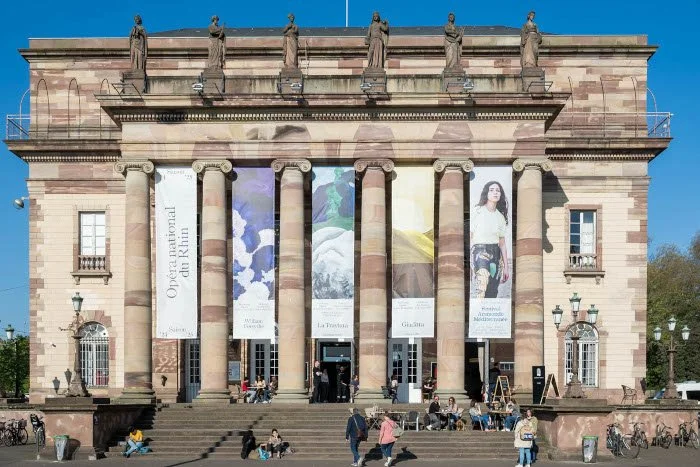
Das Wunder der Heliane
Das Wunder der Heliane
Erich Wolfgang Korngold
Oper in drei Akten.
Libretto von Hans Müller-Einigen nach dem Mysterium von Hans Kaltneker.
Uraufführung am 7. Oktober 1927 am Stadttheater in Hamburg.
Französische Erstaufführung.
Produktion der Nederlandse Reisopera.
Direction musicale Robert Houssart
Mise en scène Jakob Peters-Messer
Décors, lumières, vidéo Guido Petzold
Costumes Tanja Liebermann Chorégraphie Nicole van den Berg
Chœur de l’Opéra national du Rhin, Orchestre philharmonique de Strasbourg
Héliane Camille Schnoor
Le Souverain Josef Wagner
L'Étranger Ric Furman
La Messagère Kai Rüütel-Pajula
Le Geôlier Damien Pass
Le Juge aveugle Paul McNamara
Le jeune Homme Massimo Frigato
Les six Juges Thomas Chenhall, Glen Cunningham, Daniel Dropulja, Eduard Ferenczi Gurban, Michał Karski, Pierre Romainville
L'Ange Nicole van den Berg
Das Wunder der Heliane
Das Wunder der Heliane
Erich Wolfgang Korngold
Oper in drei Akten.
Libretto von Hans Müller-Einigen nach dem Mysterium von Hans Kaltneker.
Uraufführung am 7. Oktober 1927 am Stadttheater in Hamburg.
Französische Erstaufführung.
Produktion der Nederlandse Reisopera.
Direction musicale Robert Houssart
Mise en scène Jakob Peters-Messer
Décors, lumières, vidéo Guido Petzold
Costumes Tanja Liebermann Chorégraphie Nicole van den Berg
Chœur de l’Opéra national du Rhin, Orchestre philharmonique de Strasbourg
Héliane Camille Schnoor
Le Souverain Josef Wagner
L'Étranger Ric Furman
La Messagère Kai Rüütel-Pajula
Le Geôlier Damien Pass
Le Juge aveugle Paul McNamara
Le jeune Homme Massimo Frigato
Les six Juges Thomas Chenhall, Glen Cunningham, Daniel Dropulja, Eduard Ferenczi Gurban, Michał Karski, Pierre Romainville
L'Ange Nicole van den Berg
Das Wunder der Heliane
Das Wunder der Heliane
Erich Wolfgang Korngold
Oper in drei Akten.
Libretto von Hans Müller-Einigen nach dem Mysterium von Hans Kaltneker.
Uraufführung am 7. Oktober 1927 am Stadttheater in Hamburg.
Französische Erstaufführung.
Produktion der Nederlandse Reisopera.
Direction musicale Robert Houssart
Mise en scène Jakob Peters-Messer
Décors, lumières, vidéo Guido Petzold
Costumes Tanja Liebermann Chorégraphie Nicole van den Berg
Chœur de l’Opéra national du Rhin, Orchestre philharmonique de Strasbourg
Héliane Camille Schnoor
Le Souverain Josef Wagner
L'Étranger Ric Furman
La Messagère Kai Rüütel-Pajula
Le Geôlier Damien Pass
Le Juge aveugle Paul McNamara
Le jeune Homme Massimo Frigato
Les six Juges Thomas Chenhall, Glen Cunningham, Daniel Dropulja, Eduard Ferenczi Gurban, Michał Karski, Pierre Romainville
L'Ange Nicole van den Berg
Das Wunder der Heliane
Das Wunder der Heliane
Erich Wolfgang Korngold
Oper in drei Akten.
Libretto von Hans Müller-Einigen nach dem Mysterium von Hans Kaltneker.
Uraufführung am 7. Oktober 1927 am Stadttheater in Hamburg.
Französische Erstaufführung.
Produktion der Nederlandse Reisopera.
Direction musicale Robert Houssart
Mise en scène Jakob Peters-Messer
Décors, lumières, vidéo Guido Petzold
Costumes Tanja Liebermann Chorégraphie Nicole van den Berg
Chœur de l’Opéra national du Rhin, Orchestre philharmonique de Strasbourg
Héliane Camille Schnoor
Le Souverain Josef Wagner
L'Étranger Ric Furman
La Messagère Kai Rüütel-Pajula
Le Geôlier Damien Pass
Le Juge aveugle Paul McNamara
Le jeune Homme Massimo Frigato
Les six Juges Thomas Chenhall, Glen Cunningham, Daniel Dropulja, Eduard Ferenczi Gurban, Michał Karski, Pierre Romainville
L'Ange Nicole van den Berg
Das Wunder der Heliane - Premiere
Das Wunder der Heliane
Erich Wolfgang Korngold
Oper in drei Akten.
Libretto von Hans Müller-Einigen nach dem Mysterium von Hans Kaltneker.
Uraufführung am 7. Oktober 1927 am Stadttheater in Hamburg.
Französische Erstaufführung.
Produktion der Nederlandse Reisopera.
Direction musicale Robert Houssart
Mise en scène Jakob Peters-Messer
Décors, lumières, vidéo Guido Petzold
Costumes Tanja Liebermann Chorégraphie Nicole van den Berg
Chœur de l’Opéra national du Rhin, Orchestre philharmonique de Strasbourg
Héliane Camille Schnoor
Le Souverain Josef Wagner
L'Étranger Ric Furman
La Messagère Kai Rüütel-Pajula
Le Geôlier Damien Pass
Le Juge aveugle Paul McNamara
Le jeune Homme Massimo Frigato
Les six Juges Thomas Chenhall, Glen Cunningham, Daniel Dropulja, Eduard Ferenczi Gurban, Michał Karski, Pierre Romainville
L'Ange Nicole van den Berg

Mozart, Gluck, Haydn, Orchestre de Toulon
Concert Syrinx, Camille Schnoor, Federico Tibone, Orchestre de l’opéra de Toulon, Cathédrale de Vence

Ode à la Nuit
PROGRAMME
Richard Wagner
Prélude et mort d’Isolde (version Dorsh)
Fabien Cali
Création
Arnold Schönberg
La Nuit transfigurée
DISTRIBUTION
Direction musicale Glass Marcano
Soprano Camille Schnoor
Récitant Stéphane Guillon
Orchestre national Avignon-Provence

Musiques en fête
Musiques en fête, Live from the Chorégies d’Orange
The concert will be broadcasted live on France 3 and France Musiques


